Trust Is Not Built in an Office
Over the years, I met hundreds of importers, architects, and tile dealers. Some I saw only once. Others became lifelong friends. What has always stayed with me is that the most important conversations rarely took place in a meeting room. They almost always began around a simple table. Over a cup of coffee. Or during a shared meal. In Italy, business was conducted differently from what I was accustomed to in Belgium.
People first wanted to know who the person was with whom they might work. Only afterward did they speak about prices. Deliveries. Contracts. That approach immediately appealed to me. It reminded me of what my father had taught me. A man's word must have value. I remember asking an endless number of questions during one of my first factory visits.
Perhaps even too many. I wanted to know why a certain tile was fired at a particular temperature. Why a color could show slight natural variations. And why one size was more difficult to produce than another. At a certain point, the technical director smiled. He put his papers down on the table, looked at me, and said:
"Renato, you're not like the other sales representatives."
Surprised, I asked him why he thought so. He replied:
"Most representatives want to know how much a tile costs. You want to know how it is born."
I have never forgotten those words, because in the end they sum up my entire way of working. I have always wanted to understand how something comes into being. I have never been satisfied with the final result alone. That curiosity enabled me to feel at home in different areas of a company. Not only in sales.
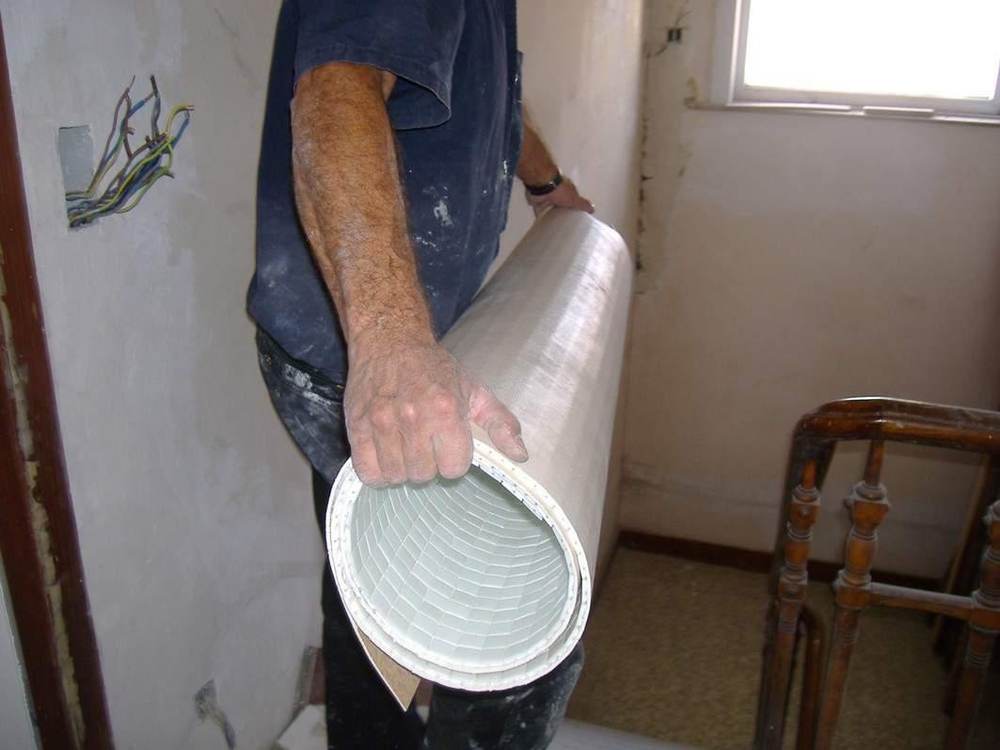
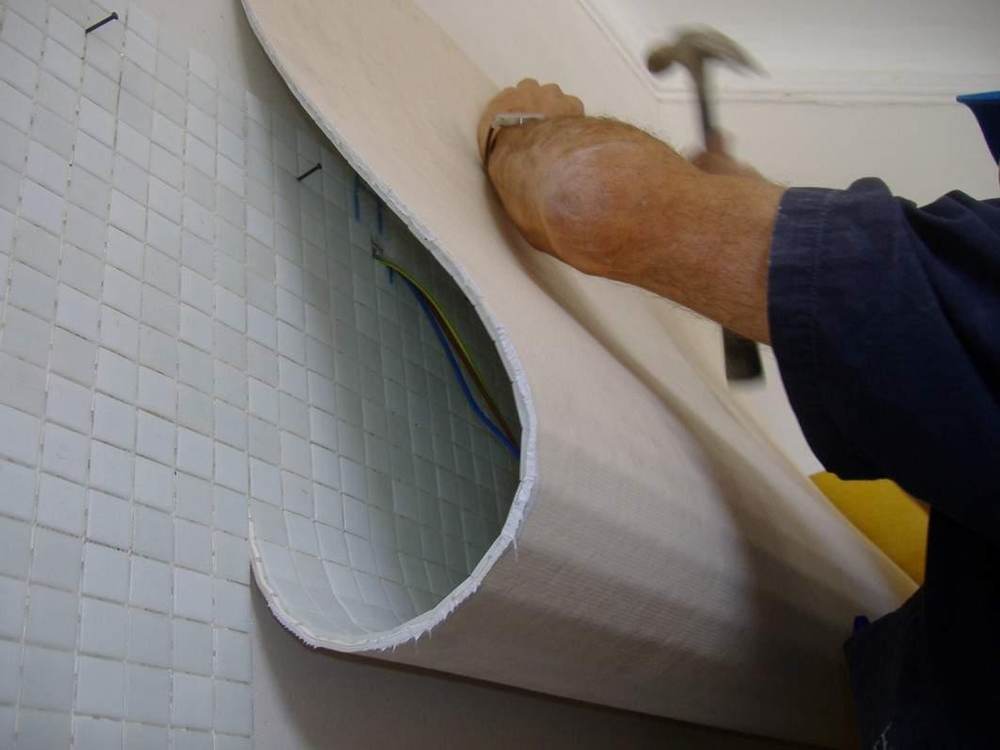
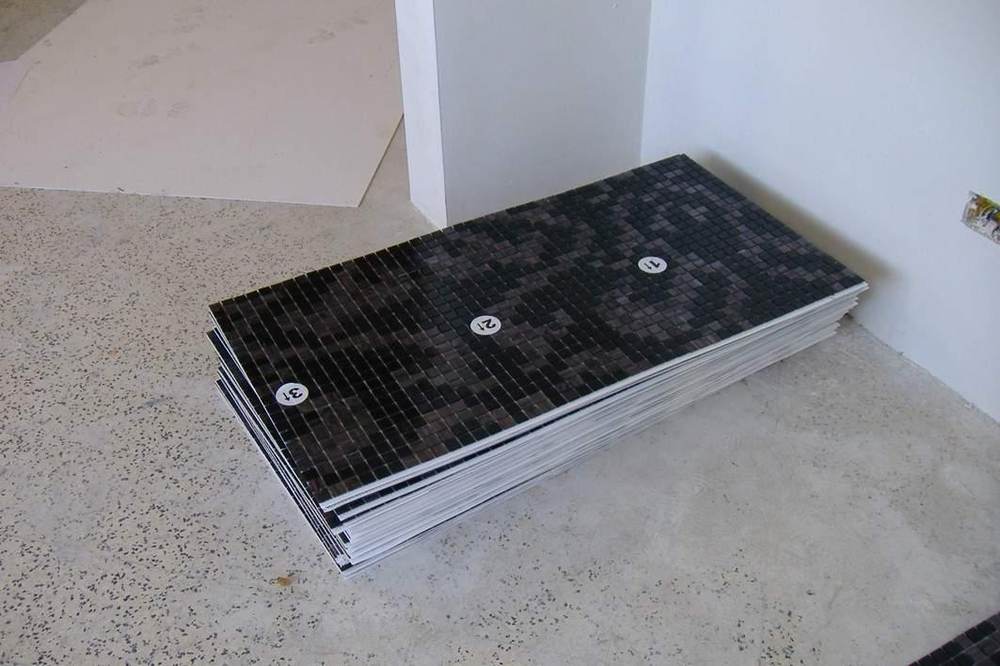
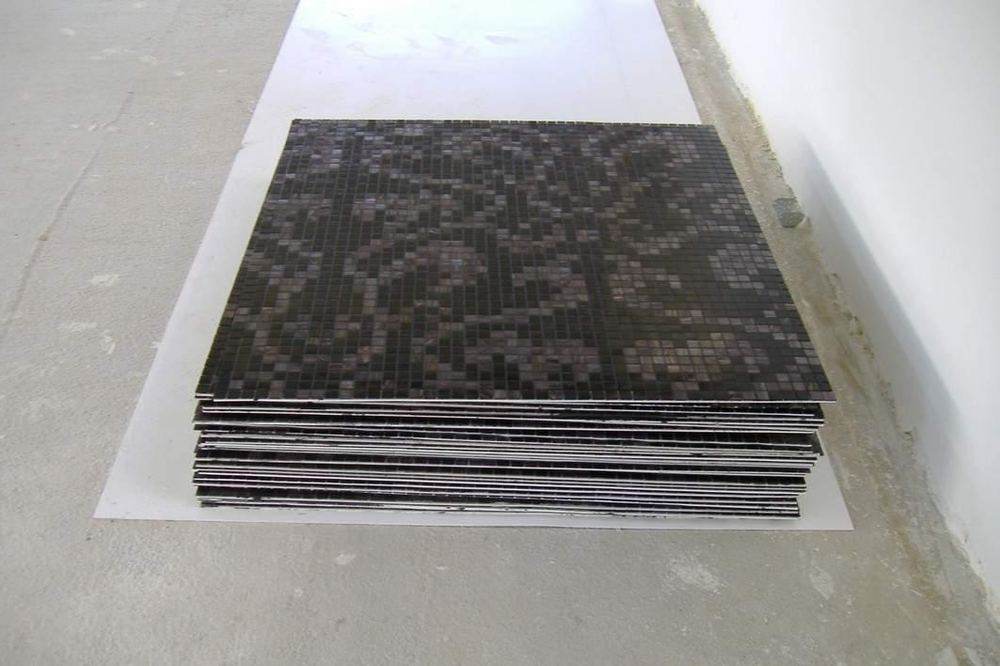
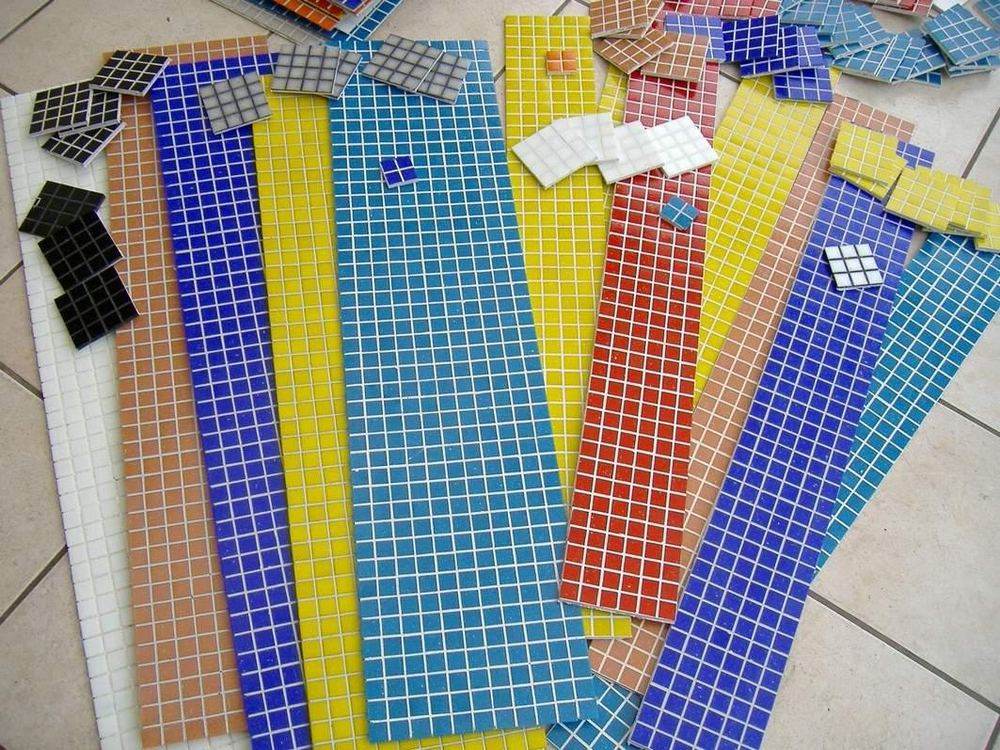
But also in production. In product development. In marketing. Even in packaging. Everything interested me. My interest was not limited to the tiles themselves. The way they were installed, bonded, and presented also constantly occupied my mind. From 1986 to 1995, I had hundreds of these tile panels made to present the Pastorelli collections in stores and showrooms. Later, large modern display units were installed as well. Unfortunately, very few photographs of these complete presentations have survived. Making those panels also brought me into contact with Mapei, one of the best-known Italian brands of tile adhesives and other products for the construction industry.
Once again, that meeting came about through my cousin Leonardo. Mr. Mariotti had approached Leonardo as one of his first customers. Through him, he then came to me and asked whether I wanted to sell Mapei products in Flanders and help introduce them there. To me, it was far more than a new business opportunity. Mapei products also gave me the chance to continue my experiments with tile and mosaic panels.
I was constantly searching for ways to make those panels lighter and, at the same time, stronger. They had to be easier to transport. Simpler to install. And able to withstand years of intensive use in showrooms. What had begun as a solution for presenting tiles slowly developed into a much larger idea. I began thinking about modular systems. About ready-to-install ceramic elements for kitchens and bathrooms.
And eventually even about floating ceramic floors that could be laid over an existing floor without first having to demolish the old one. At that moment, I could not yet imagine how far this research would lead me. Years later, it would result in an international patent. That patent was granted to me in 2009. The very year Marco died. One of my greatest professional achievements and the deepest pain of my life would thus remain forever connected.
But that story, too, still belonged to a distant future. During those early years, I was driven above all by one simple question that has accompanied me throughout my life:
"How can this be done better?"
During my many journeys to Italy, I also discovered the deeply human side of entrepreneurship. When the workday was over, we sat down at the table together. Those evenings sometimes lasted for hours. We laughed. We told stories. We spoke about our children. Our parents. Soccer. And only much later did the conversation return, almost naturally, to business. That was where I learned something that would become very important to me. Trust needs time.
It cannot be demanded. It cannot be bought. It must be earned. Perhaps that is why so many professional relationships slowly became genuine friendships. We had gone through difficult periods together. But we had also shared successes. We celebrated good news together. And when disappointments came, we stood side by side. Experiences like those create a bond that reaches far beyond anything that could ever be written into a contract.
During those years, I also learned that listening is often far more important than speaking. When a customer explained a problem to me, I never tried to offer a solution immediately. I listened first. Very often, the real question was hidden behind the words. I have kept that attitude throughout my life.
Perhaps that is also why I spent more time with my customers than many other representatives did. I have always believed that people can be persuaded only after they first feel understood. That was true then. And it is still true today. When I think back on the thousands of miles I traveled across Belgium, the Netherlands, Luxembourg, and Italy, I hardly remember the highways anymore. I remember the faces.
The conversations. The handshakes. The people who placed their trust in me. Those are the memories that remained. And perhaps that is the greatest wealth an entrepreneur can ever accumulate. Not an impressive balance sheet at the end of the year, but a heart filled with names that are still spoken with gratitude many years later. Because, in the end, it is not products that enrich a life. It is the people we were fortunate enough to meet along the way.
They are the true wealth of my story. And without them, this book would never have been written.