The Mine Was Always Present
When people think back on their childhood, they often remember the major events. A birthday. A journey. A celebration. For me, it is different. The memories that stayed with me most deeply are those of ordinary days. Days when nothing special happened. And perhaps that is precisely why they became so precious. I can still see my mother rising very early in the morning. Outside, it is still dark.
Inside the house, everything is quiet. Only the soft sound of her footsteps breaks the stillness. The coffee already begins to simmer before anyone is awake. Its wonderful aroma slowly spreads through the entire house. Even today, the smell of freshly made coffee is enough to carry me back more than seventy years in an instant. My father prepares to leave for the coal mine. His work clothes are already waiting.
He says little. There is no need. Everyone knows how hard his day will be. My mother looks at him for a moment. No long words. No dramatic farewell. Only a look. A look in which everything has already been said.
"Be careful."
Perhaps those words were never actually spoken. But they were always there. Every morning. When the front door closes behind my father, silence returns to the house. For my mother, however, the day is only beginning. The house must be cleaned. Laundry must be done. Groceries fetched. The meal prepared. The children cared for.
In those days, a mother had no days off. No fixed hours. No vacations. Her family was her life's work. We children went outside whenever we could. The street was our playground. We invented our own adventures. An old ball became the World Cup final. A piece of chalk transformed the sidewalk into an enormous game board. A wooden crate became a medieval castle. We needed so little to be happy.
When the sun was high in the sky, somewhere a mother called her children home. Moments later, another mother's voice rang out. Their calls echoed through the entire neighborhood. No one found it strange for a neighbor to scold a child who was not even her own. We were all a little responsible for one another. It seemed perfectly natural to us. Only today do I realize how exceptional that way of living together was.
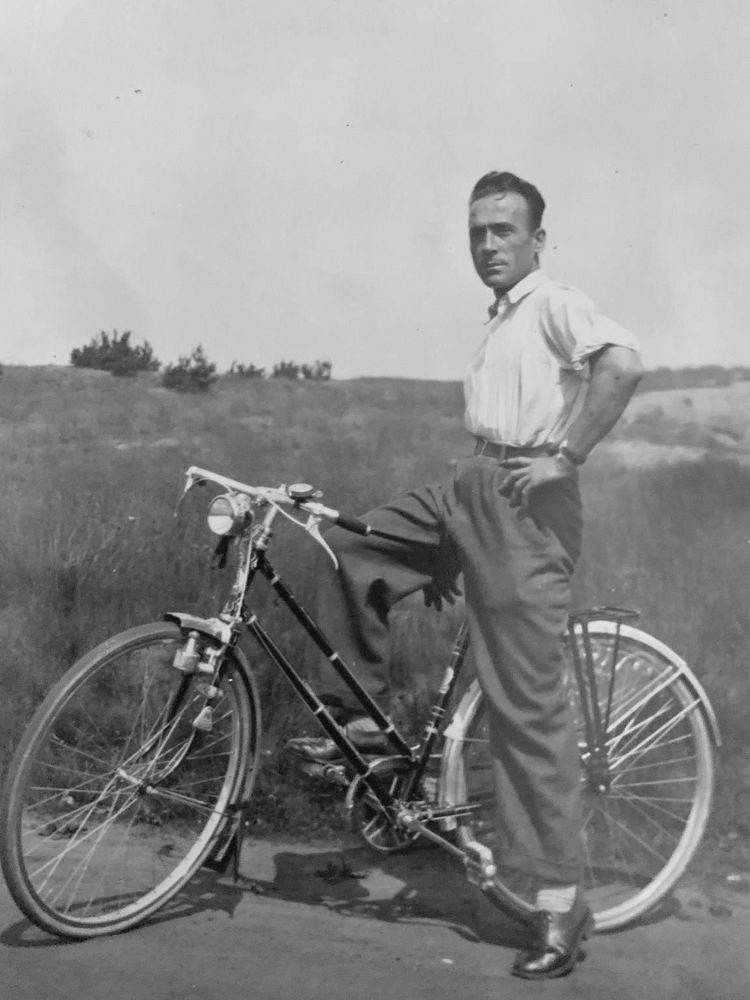
As evening approached, everyone waited for the same moment. The fathers' return. Some still carried traces of black coal dust on their faces. Others seemed dead tired. But almost all shared the same desire. To be reunited with their family. I can still see my father stepping through the front door. The first thing he did was wash carefully. As though he wanted to remove not only the coal from his skin, but also the weight of the day that had passed.
Then we all sat around the table. There was no luxury. No abundance. But no one left the table hungry. During the meal, we spoke about simple things. School. The neighbors. Our family in Italy. Sometimes we laughed. Sometimes we were silent. But that silence was never uncomfortable. We were together. And that was enough.
When I see today how many families eat separately, rush from one obligation to another, and spend their evenings in front of a screen, I sometimes wonder what we lost along the way. We possessed far less. But we had time for one another. Perhaps that was our greatest wealth. As a child, you cannot imagine that ordinary days will one day become precious memories. You believe life will always remain that way. That your father will leave for work every morning.
That your mother will always be in the kitchen. That the laughter of children will never fade. Only much later do we discover that the most ordinary days are often the most precious. Because they will never return. And when I close my eyes today, I still hear the front door close softly as my father leaves for the mine. I can still smell the coffee my mother prepared long before dawn.
These are not grand or extraordinary memories. They are the memories from which an entire life is made. I never went down into the coal mine. And yet the mine helped shape my whole life. It was everywhere. Not only underground. But above it as well. In our homes. In our streets. In our conversations. In our mothers' silent worry. In our fathers' weariness. As a child, I thought all fathers lived that way.
That it was normal to leave before sunrise and return only late in the afternoon. I knew no other reality. Only much later did I understand how exceptional their lives were. To us children, the mine was only a word. To our parents, it was a daily reality. Every working day, thousands of men descended deep underground. They hoped to come back up that same evening.
But no one could ever be completely certain. A collapse. A gas explosion. A failure of the mine elevator. An unforeseen accident. Every working day, our mothers carried that silent fear deep in their hearts. Yet I do not remember them speaking about it constantly. Perhaps they wanted to protect their children.
Perhaps they themselves had to keep believing that everything would be all right. That was the strength of their generation. They carried their worries in silence. When the mine siren sounded, we could hear it throughout the community. To us children, it was a familiar sound. It was part of the day's rhythm.
But to the adults, it meant something very different. The mine determined their lives. Their working hours. Their future. I also remember the men's faces at the end of the day. Some smiled. Others were silent. Almost all looked older than they truly were. Their work had left its marks. Not only on their hands.
But also in their backs. In their lungs. And in their eyes. And yet they continued. Not because they had no dreams. But because their dreams had become the dreams of their children. My father was one of those men. He rarely spoke about his work. Not because he had secrets.
But because he believed his children should not have to carry the weight of his fatigue. Only today do I fully understand that way of thinking. Now that I, too, look back on my own life. How often did I hide my own worries so my family would not have to carry them with me? Probably far more often than I ever realized. In that respect, I became much more like my father than I could have imagined.
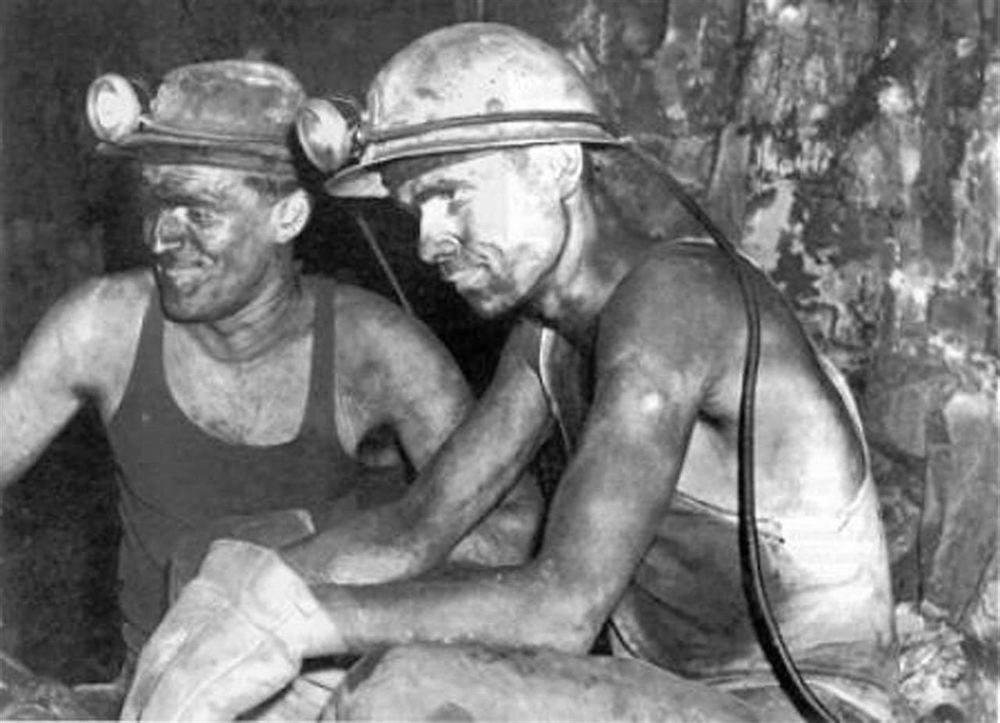
The mine gave our families work. But in return, it demanded a high price. Health. Strength. Years of a human life. When I look at old photographs of miners today, I no longer see them through the eyes of the child I was. As a little boy, I saw men whose faces were blackened by coal dust.
Today, I see fathers. Husbands. Sons. Men who had set aside their own dreams so their children could realize theirs. Perhaps that is the greatest legacy of their generation. They did not only build homes. They built possibilities. My life would have been completely different if my father had not made the difficult decision to leave Italy.
Everything that followed - every encounter, every opportunity, every success, every failure, my love for Dorina, the births of Marco and Michael, my work, and my constant search for new ideas - ultimately began with the single courageous decision of a young man who left his native village.
That is why I still feel such profound gratitude toward that generation today. Not because they wanted to be heroes.
But because, day after day, they simply did what had to be done. Without applause. Without recognition. Simply out of love for their family. And every time I read the title of my book - MY LIFE — IN THE NAME OF ALL MY LOVED ONES - I understand that it does not honor only my own family.
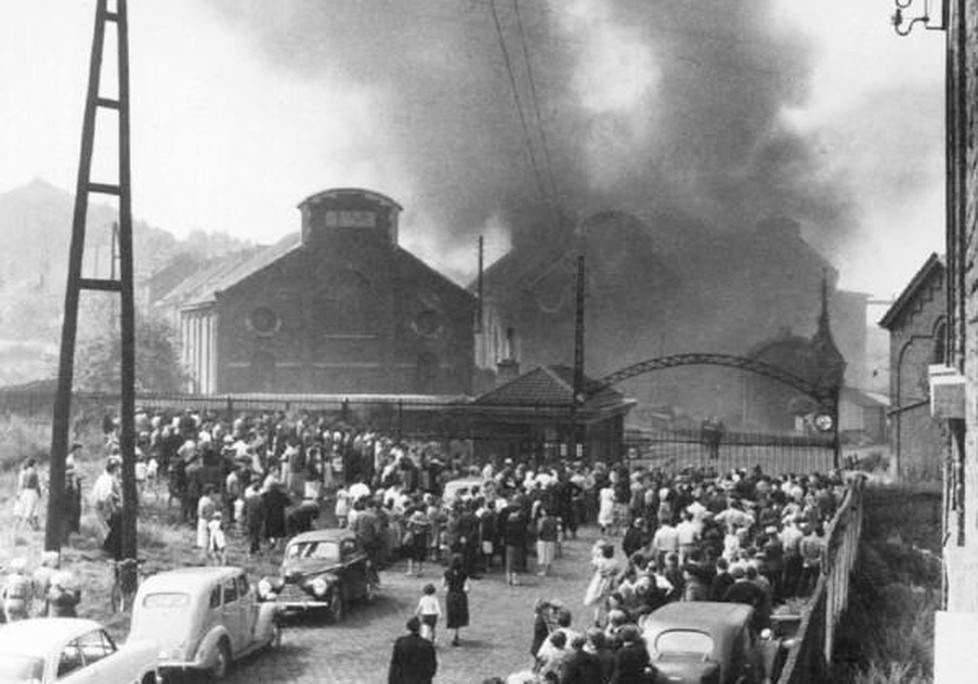
It also honors all those men and women who built their lives on hope, courage, and sacrifice. I dedicate this story to them. On August 8, 1956, a disaster shattered the lives of thousands of mining families. At the Bois du Cazier mine in Marcinelle, 262 people lost their lives. Among them were 136 Italians. I was eight years old. Marcinelle was not located beside our community.
But in the world of miners, distance almost ceased to exist at moments like that. Any miner might have been underground. Any wife might have been waiting for news. Any child might have been left without a father that evening. I remember how the atmosphere among the adults changed. People spoke more quietly. The women were worried. People searched for news and continued to hope while despair grew hour by hour. We children did not understand everything that was happening.
But children sense far more than adults sometimes realize. We sensed the silence. The tension. The fear no one wanted to express fully. To the Italian community in Belgium, Marcinelle was not an event read about in the newspaper. It was like a disaster striking one large family. The victims came from different countries. They had different names. They spoke different languages.
But underground, they had performed the same grueling work. And above ground, people who loved them waited. My father himself worked at the Zolder mine. He knew its dangers. He knew that no miner could say in the morning, with absolute certainty, that he would return home that evening. He had always hoped that his sons would never have to work underground.
After Marcinelle, that wish only became stronger. His children had to study. They had to know another life. Not because he was ashamed of his work. On the contrary. He was proud of what his labor allowed him to provide for his family. But precisely because he knew the price the mine could demand, he wanted to spare us from it.
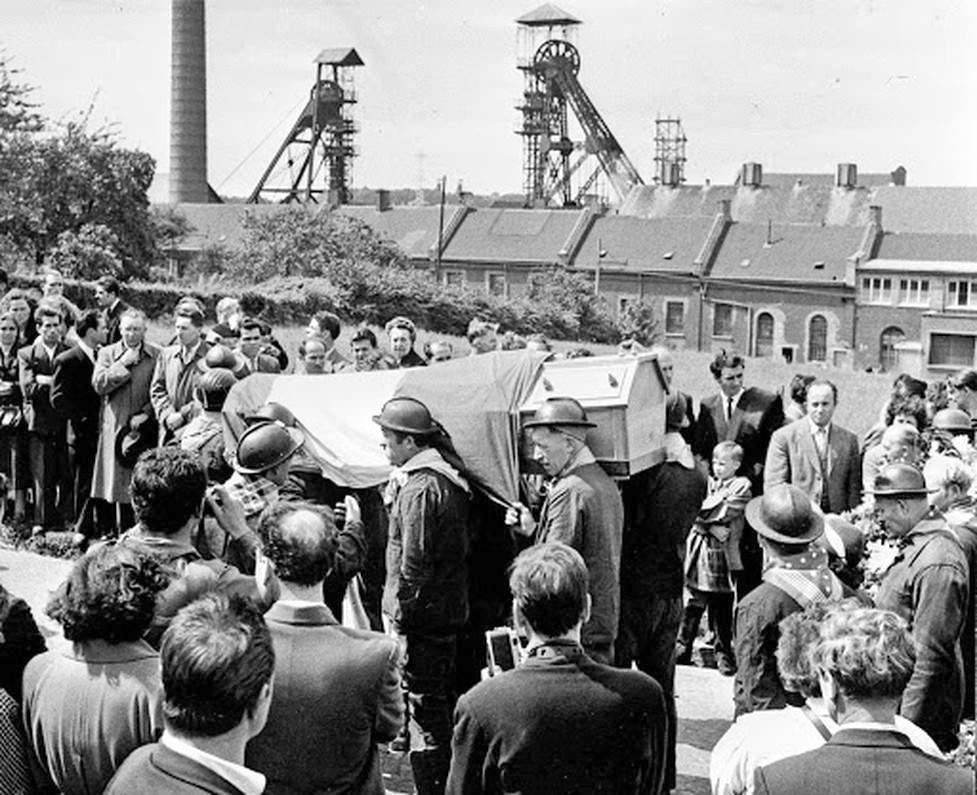
When I think of Marcinelle today, I do not see only a number. I think of 262 lives. Of 262 families. Of mothers, wives, and children whose world changed forever in a single day. The disaster belongs to the history of Belgium and Italy. But it also belongs to the history of families like ours. It revealed what our parents tried to push from their thoughts every working day: the mine put bread on the table, but it never promised to bring the men safely home. Perhaps I did not yet fully understand what death or loss meant. But I understood that the adults were afraid. And that the world beneath our feet was far more dangerous than we children had ever imagined. Marcinelle did not take my father from me. I remained grateful for that throughout my life.
But on that day, an entire generation learned once again how fragile its existence was. That is why this story must never be forgotten. Not only in the name of the mines. But above all in the name of all my loved ones who never came back up.