Chapter 6 My Father and the World of the Mine
When people ask me from whom I learned the most in life, many expect me to name entrepreneurs, inventors, or people who influenced my professional path. But the truth is much simpler. My greatest teachers were my father and mother. Neither of them ever wrote a book. Neither ever received an important distinction. They were simple people. And yet they taught me everything that truly matters. My father, Antonio Rossi, was a man of few words. He belonged to a generation of men who rarely expressed their feelings through speech. He rose early. He went to work. He came home exhausted. And the next morning, it all began again. As a child, this seemed the most normal thing in the world. Only many years later did I understand that each day he was once again putting his health at risk.
Deep beneath the earth. In the darkness. Far from daylight. Not because he loved the work. But because he believed his family deserved a better life than the one he himself had known. My father had a dream. Not for himself. For his children. He often said that none of his sons should ever have to work in the coal mines. That was his greatest victory. Not what he earned. But what he hoped to spare us. My mother, Guglielmina, was very different. Where my father often hid his feelings, my mother showed her love in everything she did. In the meals she prepared for us. In the care with which she looked after our clothes. In the way she comforted us when we were sad. She rarely complained. And yet she had a thousand reasons to do so.
She had left her homeland. Left her family behind. Lost a daughter. And despite everything, day after day, she continued to care for those she loved. Only when I became an adult did I begin to understand the strength that must have required. My parents never taught me how to become rich. They taught me to go through life with honesty and dignity. They never told me I had to become someone important. They taught me that every human being deserves respect. Rich or poor. Well known or unknown. Highly educated or barely able to read and write. Later, when I had the opportunity to sit at the same table as executives, industrialists, and successful entrepreneurs, I never felt that they were worth more than the simple miner my father had been.
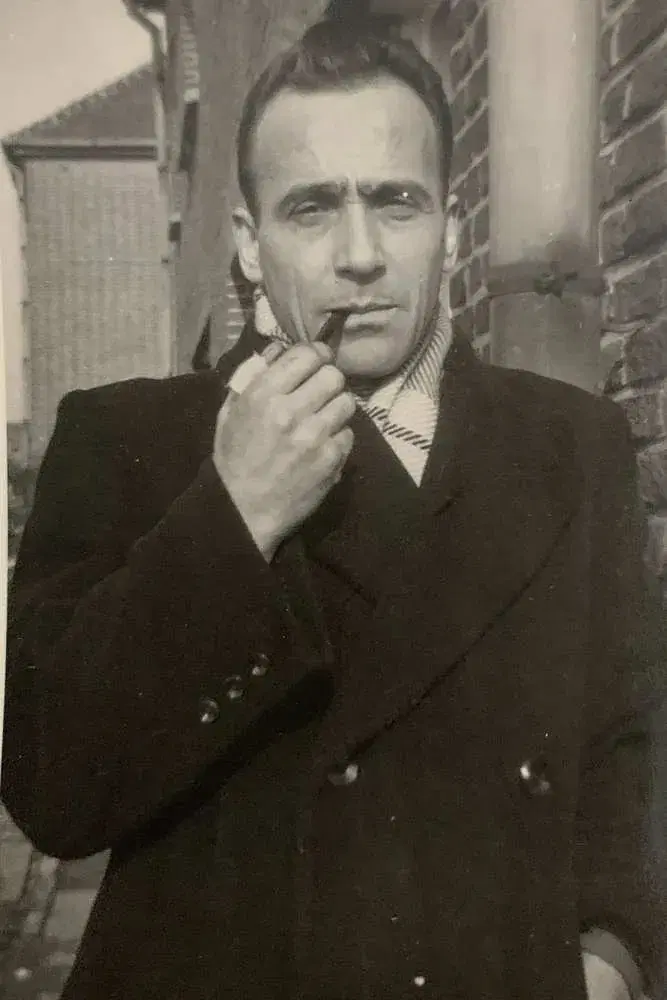
My father Antonio at De Lindeman.
That is a value I received at home. That is probably also why I have always felt at ease wherever I was. In a neighborhood café. In a factory. In a business owner’s office. Or around a table with people I had just met. I always tried to see the human being first. And only then their profession or position. Today, I sometimes wonder how much of my parents still lives within me. I believe it is far more than I once thought. Whenever I try to help someone. Whenever I show respect to a person who owns little. Whenever I choose to listen instead of speaking, I recognize something of my father. Something of my mother. They do not live only in old photographs. They live in everything they passed on to me.
And perhaps that is the greatest inheritance parents can leave their children. Not money. Not possessions. But values. Values passed from one generation to the next. If only one thought from my childhood were to remain forever, it would be this: my father taught me to work. My mother taught me to live. Only much later did I understand that without both of them, I would never have become the man I am today.
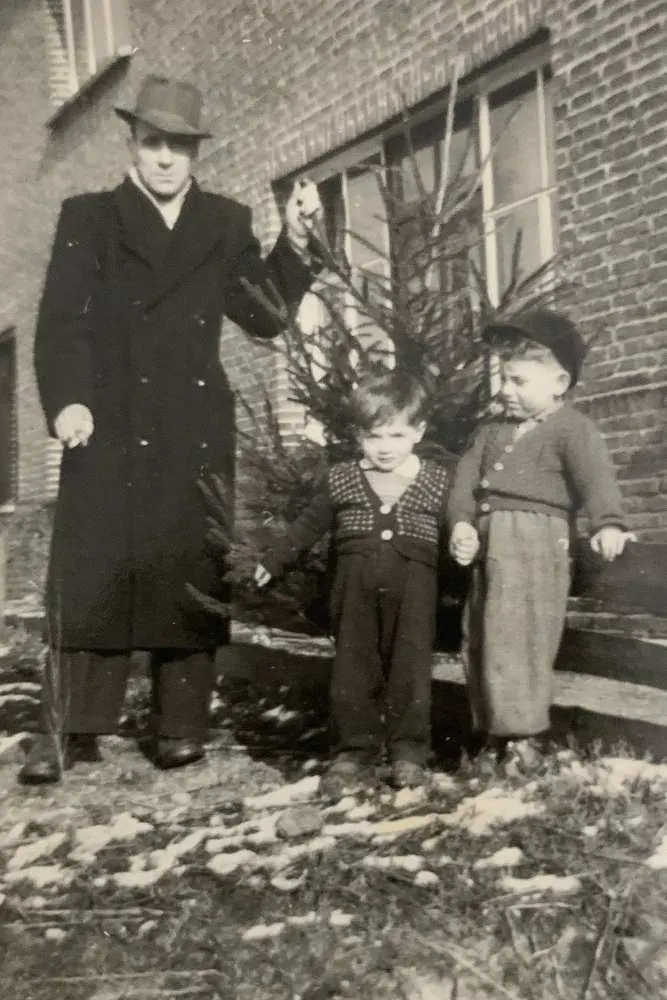
My father with my brother Carmine and me.
When people think back on their childhood, they often remember the major events. A birthday. A journey. A celebration. For me, it is different. The memories that stayed with me most deeply are those of ordinary days. Days when nothing special happened. And perhaps that is precisely why they became so precious. I can still see my mother rising very early in the morning. Outside, it is still dark. Inside the house, everything is quiet. Only the soft sound of her footsteps breaks the stillness. The coffee already begins to simmer before anyone is awake. Its wonderful aroma slowly spreads through the entire house. Even today, the smell of freshly made coffee is enough to carry me back more than seventy years in an instant. My father prepares to leave for the coal mine. His work clothes are already waiting.
He says little. There is no need. Everyone knows how hard his day will be. My mother looks at him for a moment. No long words. No dramatic farewell. Only a look. A look in which everything has already been said. ‘Be careful.’ Perhaps those words were never actually spoken. But they were always there. Every morning. When the front door closes behind my father, silence returns to the house. For my mother, however, the day is only beginning. The house must be cleaned. Laundry must be done. Groceries fetched. The meal prepared. The children cared for. In those days, a mother had no days off. No fixed hours. No vacations. Her family was her life’s work. We children went outside whenever we could. The street was our playground. We invented our own adventures. An old ball became the World Cup final.
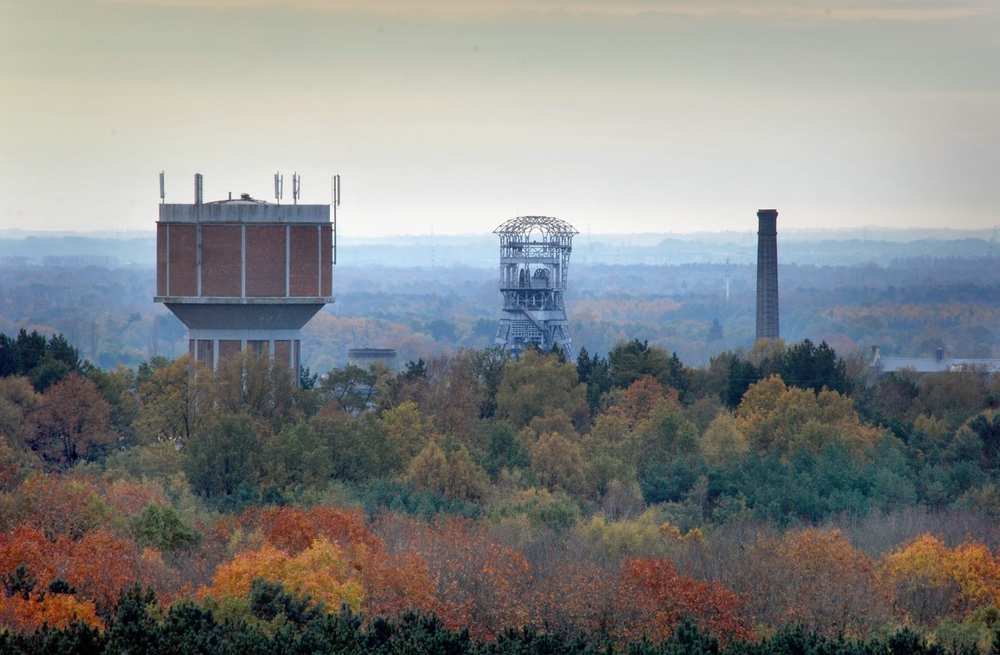
The mining landscape that shaped the lives of so many families.
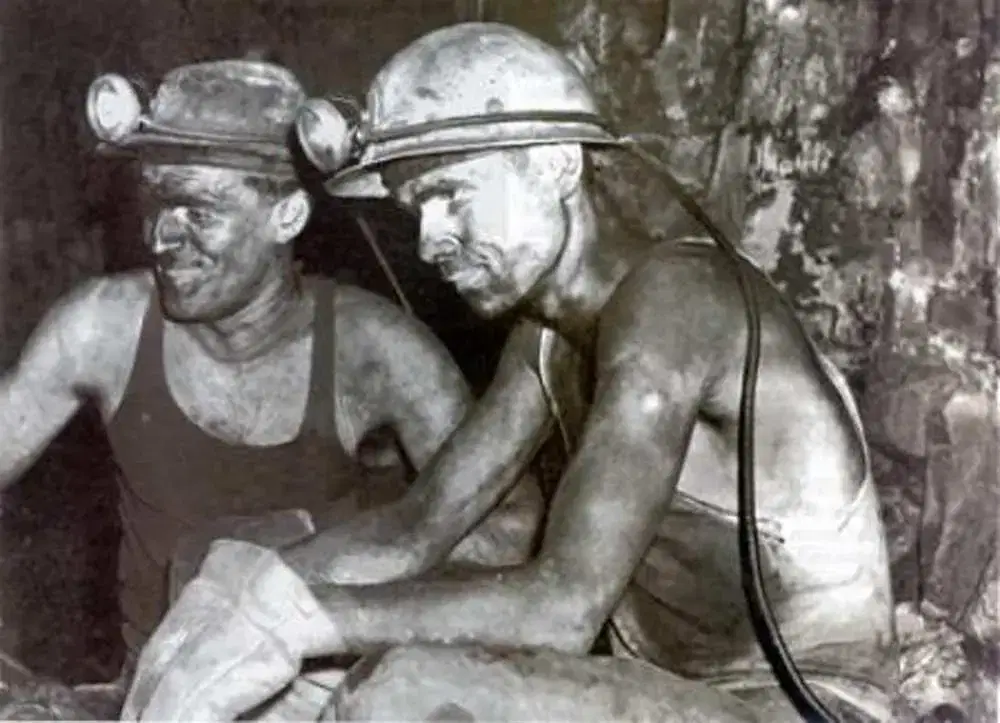
Miners underground: hard work, comradeship and courage.
A piece of chalk transformed the sidewalk into an enormous game board. A wooden crate became a medieval castle. We needed so little to be happy. When the sun was high in the sky, somewhere a mother called her children home. Moments later, another mother’s voice rang out. Their calls echoed through the entire neighborhood. No one found it strange for a neighbor to scold a child who was not even her own. We were all a little responsible for one another. It seemed perfectly natural to us. Only today do I realize how exceptional that way of living together was. As evening approached, everyone waited for the same moment. The fathers’ return. Some still carried traces of black coal dust on their faces. Others seemed dead tired. But almost all shared the same desire. To be reunited with their family.
I can still see my father stepping through the front door. The first thing he did was wash carefully. As though he wanted to remove not only the coal from his skin, but also the weight of the day that had passed. Then we all sat around the table. There was no luxury. No abundance. But no one left the table hungry. During the meal, we spoke about simple things. School. The neighbors. Our family in Italy. Sometimes we laughed. Sometimes we were silent. But that silence was never uncomfortable. We were together. And that was enough.
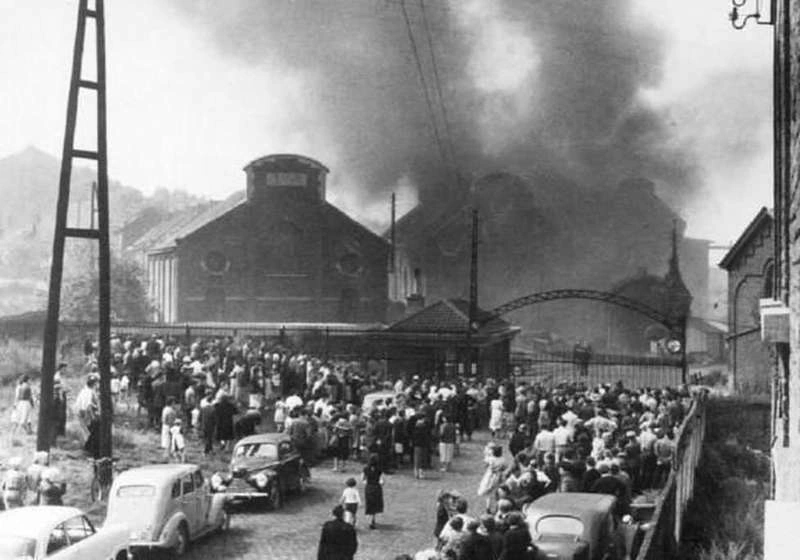
The Marcinelle disaster became a deep wound in the Italian community.
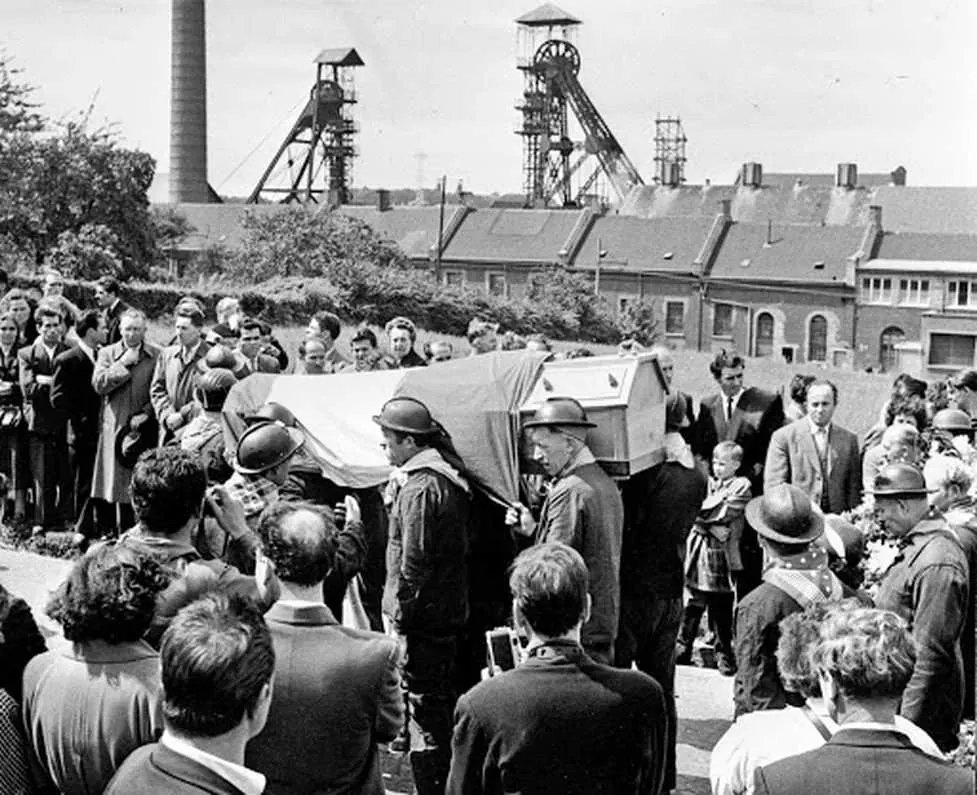
Grief and devastation after the mining disaster that claimed 262 lives.
It also honors all those men and women who built their lives on hope, courage, and sacrifice. I dedicate this story to them. On August 8, 1956, a disaster shattered the lives of thousands of mining families. At the Bois du Cazier mine in Marcinelle, 262 people lost their lives. Among them were 136 Italians. I was eight years old. Marcinelle was not located beside our community. But in the world of miners, distance almost ceased to exist at moments like that. Any miner might have been underground. Any wife might have been waiting for news. Any child might have been left without a father that evening. I remember how the atmosphere among the adults changed. People spoke more quietly. The women were worried. People searched for news and continued to hope while despair grew hour by hour. We children did not understand everything that was happening.
But children sense far more than adults sometimes realize. We sensed the silence. The tension. The fear no one wanted to express fully. To the Italian community in Belgium, Marcinelle was not an event read about in the newspaper. It was like a disaster striking one large family. The victims came from different countries. They had different names. They spoke different languages. But underground, they had performed the same grueling work. And above ground, people who loved them waited. My father himself worked at the Zolder mine. He knew its dangers. He knew that no miner could say in the morning, with absolute certainty, that he would return home that evening. He had always hoped that his sons would never have to work underground. After Marcinelle, that wish only became stronger. His children had to study. They had to know another life.
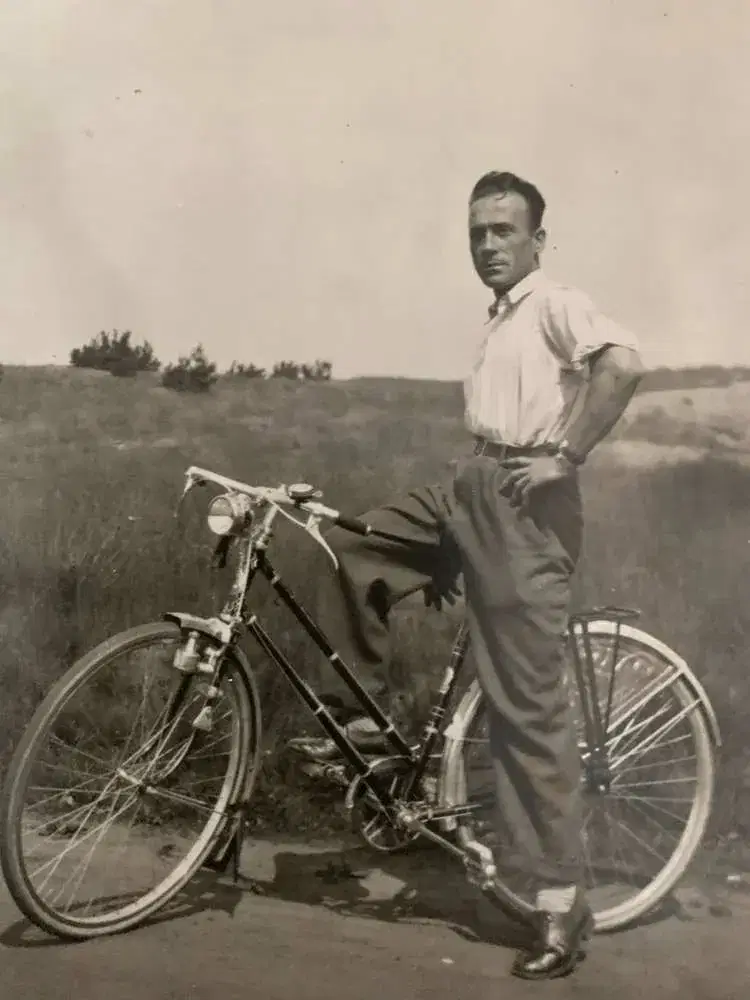
My father with his bicycle near the De Lindeman mining estate.
Not because he was ashamed of his work. On the contrary. He was proud of what his labor allowed him to provide for his family. But precisely because he knew the price the mine could demand, he wanted to spare us from it. When I think of Marcinelle today, I do not see only a number. I think of 262 lives. Of 262 families. Of mothers, wives, and children whose world changed forever in a single day. The disaster belongs to the history of Belgium and Italy. But it also belongs to the history of families like ours. It revealed what our parents tried to push from their thoughts every working day: the mine put bread on the table,
Marcinelle remained a warning to every mining family: the mine provided bread, but it never promised that every man would return home safely.